Sample Preparation
FFPE or frozen blocks, sectioning, screening, quality controls, and staining optimized for spatial assays.

Spatial genomics reveals biology where it lives — unlocking biomarkers, therapies, and deeper understanding.
Schedule a free project discussion with our spatial genomics experts
🔒 We respect your privacy. No spam, ever.
Because where biology happens matters.
Conventional sequencing tells you what genes are expressed — but it loses the where. Spatial genomics preserves tissue architecture, revealing how cells interact, how microenvironments shape disease, and where potential biomarkers reside.
This matters for clinicians and researchers because it enables:
Context-aware biomarkers that are visible only in situ.
Deeper understanding of the tumor–immune microenvironment.
Tracking of disease progression and therapy response within tissue.
Integration of multiomics — transcriptomics, proteomics, and single-cell data — for a comprehensive view.
In short: spatial genomics connects molecular data with the tissue context that drives health and disease.
Spatial genomics starts with your samples — FFPE or frozen, blocks or slides. At Next Level Genomics, we prepare and process tissues for seamless integration into spatial platforms.
We provide:
Sample prep & histopathology — microtomy, staining, and optimization.
Custom panel design — morphology markers, cell typing, targeted panels.
Flexible outputs — data visualization & analysis, or raw data for in-house pipelines.
Expert guidance — our spatial team partners with you from design to discovery.
Let Next Level Genomics guide your spatial journey and unlock the depth of data available with the latest spatial technologies.
FFPE or frozen blocks, sectioning, screening, quality controls, and staining optimized for spatial assays.

Morphology markers, cell typing panels, and targeted gene/protein panels tailored to your project.
High-plex profiling with GeoMx DSP, CosMx SMI, Visium HD/HD3', Xenium, MERFISH and more — producing multiomic datasets.
Visualization, bioinformatics, and expert interpretation. Raw data delivery or full end-to-end reporting or publication support.
Spatial proteomics was recognized by Nature Methods as the Method of the Year 2024 for its transformative role in mapping proteins directly within intact tissues . Unlike transcriptomics, spatial proteomics captures the functional drivers of biology—proteins and their post-translational modifications—while preserving spatial context.
Technologies such as cyclic immunofluorescence (cycIF), CODEX, IBEX, MIBI, imaging mass cytometry (IMC), and emerging methods like deep visual proteomics (DVP) are generating highly multiplexed protein maps at cellular resolution. These advances are powering atlas-scale efforts such as HuBMAP and HTAN, accelerating discoveries in oncology, immunology, neuroscience, and precision medicine.
At Next Level Genomics, we bring these innovations to Singapore with the GeoMx Discovery Proteome Atlas (DPA), the highest-plex antibody-based spatial proteomics assay, enabling researchers to interrogate 1,200+ proteins—including 130+ post-translational modifications—directly in FFPE samples.
In addition, through CosMx Spatial Molecular Imaging, we support same-cell proteogenomics, allowing researchers to study RNA and protein within the same tissue sections. This integrated approach delivers a multi-dimensional view of disease biology, enabling faster translation from discovery to clinical insight.
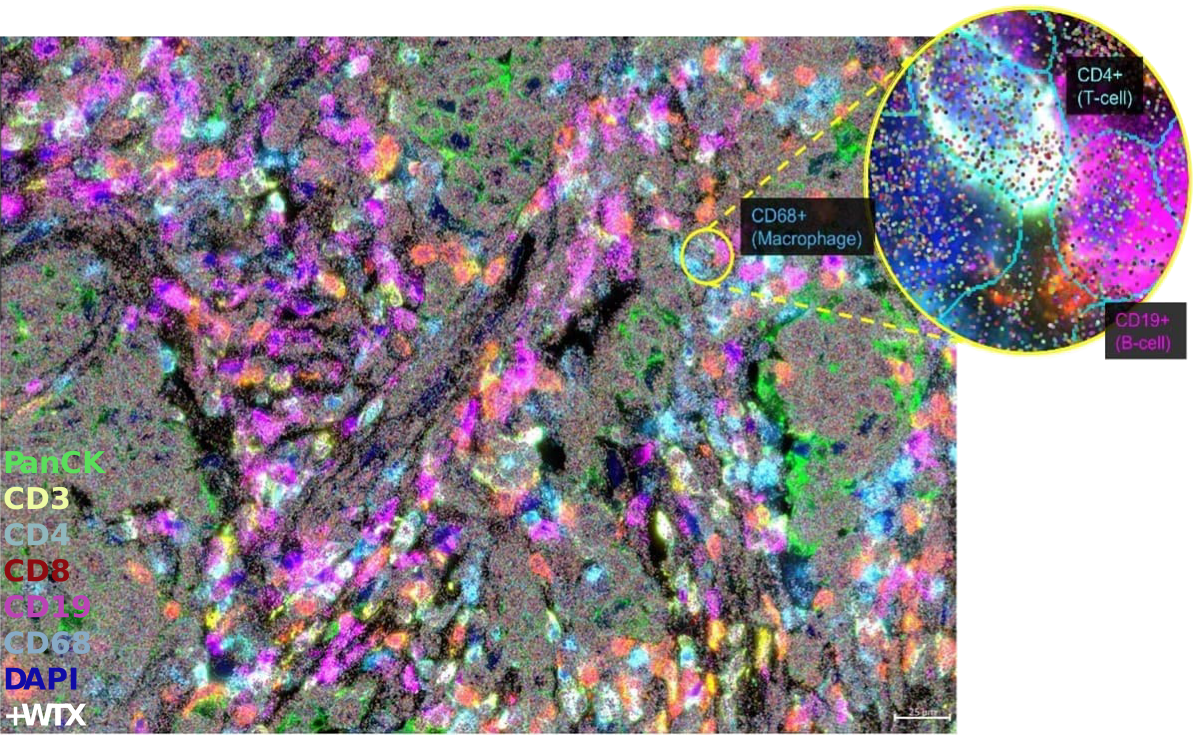
The CosMx™ Spatial Molecular Imager (SMI) delivers high-plex, single-cell, and subcellular-resolution imaging of RNA and protein expression in FFPE and fresh frozen tissue sections. It enables true spatial multiomics, capturing up to 19,000 RNA targets and 64 validated proteins within the same tissue — with expanded proteogenomic assays in development.
Through Whole Transcriptome Expression (WTX) and targeted panels, CosMx offers unparalleled resolution of cellular states and interactions within complex tissues. This capability makes it uniquely suited for integrative proteogenomics, connecting RNA and protein biology directly in situ to reveal mechanisms of disease progression and therapeutic response.
CosMx empowers high-definition discovery across oncology, immunology, neuroscience, and translational research.
The GeoMx® Digital Spatial Profiler (DSP) is a versatile spatial multiomics platform for high-plex RNA and protein profiling in FFPE and fresh frozen (FF) tissue sections. GeoMx enables non-destructive spatial analysis of gene and protein expression across defined tissue compartments and cell populations, providing deep molecular insight within histological context.
Supporting the Whole Transcriptome Atlas (WTA) and the expanded 1,200-protein Discover Protein Atlas (DPA) panel, GeoMx allows comprehensive exploration of spatial gene and protein expression within the same sample. NLG’s spatial genomics specialists offer expert Region of Interest (ROI) selection, collaborating with researchers locally or remotely to ensure optimal biological relevance and data quality.
GeoMx provides a scalable solution for mapping spatial heterogeneity and biomarker landscapes across diverse disease models and therapeutic studies.
The Visium HD and Visium HD 3′ platforms bring next-generation spatial transcriptomics to both FFPE and fresh frozen (FF) tissue, enabling whole-transcriptome profiling at near single-cell resolution. Visium HD introduces a continuous capture surface that captures transcriptomic activity across the entire tissue landscape without the constraints of fixed spot arrays.
The Visium HD 3′ assay delivers high-throughput, unbiased 3′ gene expression mapping, offering exceptional spatial detail and sensitivity to reveal tissue architecture, cellular interactions, and molecular gradients.
Designed for true multiomic integration, Visium HD data can be seamlessly combined with upstream proteomics and downstream long-read sequencing workflows — connecting transcriptional, proteomic, and genomic layers into a single, comprehensive view of biological complexity.
The Xenium In Situ platform delivers high-plex, subcellular-resolution spatial transcriptomics for FFPE and fresh frozen tissue sections, enabling precise visualization and quantification of gene and protein expression within intact tissue architecture.
Xenium can simultaneously detect up to 500 RNA targets and 27 protein markers on a single slide, combining transcriptomic and proteomic insights in situ. Its enzymatic signal amplification chemistry enhances sensitivity, enabling reliable detection of even low-abundance transcripts and proteins within complex tissue environments.
Following Xenium imaging, the same tissue slide can be processed with Visium for comprehensive spatial gene expression mapping, providing complementary data that bridges targeted in situ analysis with whole-transcriptome resolution.
Together, these capabilities make Xenium a powerful tool for uncovering cellular interactions, signaling pathways, and disease mechanisms at unprecedented spatial detail.
Through our partnership with Bioturing, Next Level Genomics (NLG) extends spatial biology beyond data generation into advanced analytics, visualization, and biological interpretation.
The Bioturing Spatial Analytics Platform (SpatialX / Lens) unifies spatial multiomic datasets from diverse technologies — including GeoMx, CosMx, Visium, and Xenium — within an intuitive, interactive environment. Researchers can visualize high-plex spatial data, explore cell-cell interactions, define tissue regions, and perform spatial differential expression analysis with ease.
Built with powerful AI-driven tools for cell segmentation, cell type annotation, and integrated transcriptomic and proteomic visualization, Bioturing transforms complex datasets into clear, interpretable biological insights.
By combining NLG’s spatial genomics expertise with Bioturing’s analytical ecosystem, researchers gain a seamless, end-to-end workflow — from sample to spatial insight.
Beyond advanced instrumentation, Next Level Genomics (NLG) provides a comprehensive suite of auxiliary spatial services designed to support every stage of spatial biology research. Our services ensure that every project — from tissue preparation to data interpretation — achieves the highest possible quality and reproducibility.
NLG’s auxiliary offerings include:
Sample preparation and optimization for FFPE and fresh frozen tissue
Histology, immunostaining, and imaging support for multiplex spatial workflows
Region of Interest (ROI) consultation and collaborative selection, available both onsite and remotely
Quality control (QC) and troubleshooting to ensure assay reliability and consistency
Data processing, bioinformatics, and downstream integration across multiple spatial and sequencing platforms
Training, workflow customization, and technical consultancy for labs adopting spatial technologies
By combining these support services with our platform expertise, NLG delivers a seamless, end-to-end spatial genomics experience — empowering researchers to focus on discovery while we handle the technical complexity.
Spatial genomics provides the most in-depth picture of the biology of a sample – from the spatial context in which cells and interactions are taking place to the extra-cellular microenvironment to morphological changes. Spatial is orders of magnitude more information than single-cell RNAseq or other methods of examining cell signaling and response. If you would like to know not just who the players are in your sample but where they are and how they interact, spatial genomics is for you.
Yes, all assays on the Nanostring systems allow for customization with the addition of probes for your specific genes of interest. And any antibodies against your favorite protein target can be labeled and utilized for spatial analysis on these systems. For the nCounter, the whole custom panel design and validation are available. Contact our spatial specialist for information on gene lists and how to customize assays for your needs.
Spatial analysis involves slide preparation, processing, and scanning on the instruments. Slide preparation can be done by Next Level Genomics, or you can pass your own slides for processing. Slide processing takes 1-2 days, and they are ready to go onto the instrument. On the GeoMx DSP platform, scanning takes just a few hours, and regions of interest are selected and captured for downstream NGS analysis. NGS sequencing can take a few weeks before the data is available for final analysis. On the CosMx platform, the slides are scanned and fields of view are selected for analysis, and over 4–8 days, the data is collected and captured in real-time. Upon completion of the CosMx run, the data is available on the cloud-based AtoMx platform for immediate analysis.
The Nanostring Spatial ecosystem includes the cloud-based AtoMx bioinformatics system for the analysis of data. Pipelines consisting of transcriptomic analysis, clustering, PCA/UMAP, neighborhood analysis, cell typing, and cell-cell interactions are all available on the AtoMx system. In addition, raw data is available for download and offline analysis by the Next Level Genomics team or your own bioinformatics team.
Yes, assays include cell segmentation protein markers and cell typing markers, as well as the capability to explore additional protein targets with your RNA panel. Nanostring systems are non-destructive in their method of data capture, which allows for the analysis of both RNA and protein on a slide.
Nanostring GeoMx and CosMx systems perform best when using slides that bind tightly to FFPE slides, such as Leica Bond slides. Standard FFPE blocks can be used for the nanostring systems. No new tissue samples or biopsies are needed. Contact our spatial specialist to learn more about slides and processing and how to maximize your data using Nanostring spatial systems.
Unlock the potential of your genomics projects with personalized guidance. Connect with our seasoned experts at Next Level Genomics to discuss your goals, explore possibilities, and pave the way for groundbreaking discoveries. Fill out the form to initiate a discussion and propel your research forward.
Next Level Genomics (NLG) is a cutting-edge genomics provider offering long-read sequencing (LRS) and spatial genomics capabilities in our two laboratories in Singapore, located in Biopolis.
Quick Links
Contact
Main Office and NGS Lab
Next Level Genomics Pte Ltd
3 Biopolis Drive, #05-19 Synapse
Singapore 138623
Spatial Biology Lab
60 Biopolis Street
#05-07 Genome
Singapore 138672
Copyright © 2025 Next Level Genomics. All rights reserved.